How to Use Proton Sentinel to Keep Your Accounts Safe

If you want the highest possible level of protection, this is it.
https://www.wired.com/story/how-to-use-proton-sentinel/
How to Use Proton Sentinel to Keep Your Accounts Safe
If you want the highest possible level of protection, this is it.
https://www.wired.com/story/how-to-use-proton-sentinel/
US Copyright Office opens public comments on AI and content ownership
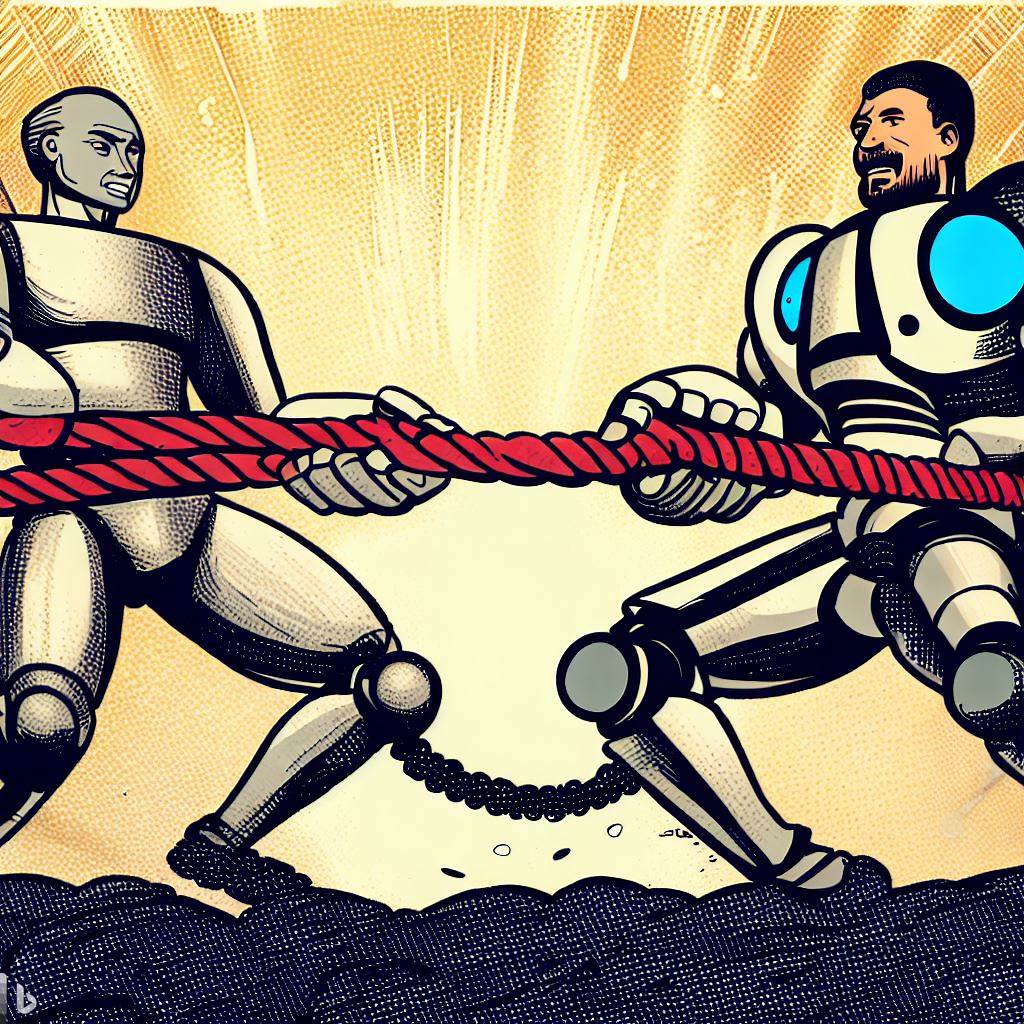
The US Copyright Office is asking for people's opinions on generative AI, which is technology that can create things like art and text on its own. They want to know who should own the things AI makes. Some big questions include whether AI-created stuff can be copyrighted, and if so, how much human help it needs to be copyrighted. They're also looking at cases where AI was used to make art or writing without much human input. The public can share their thoughts on these issues until November 15th. This is important because it could change how AI and creativity work together.
OpenAI urges court to throw out authors' claims in AI copyright battle

OpenAI is seeking to dismiss claims in two legal actions brought against the company by authors and comedians. The individuals sued OpenAI for using their works to train ChatGPT without explicit permission, accusing the company of copyright infringement. OpenAI's legal team is asking a federal court in San Francisco to dismiss five of the six claims brought by the plaintiffs, including vicarious infringement, violation of the Digital Millennium Copyright Act, unfair competition, negligence, and unjust enrichment. The company is prepared to defend itself against the first claim of direct copyright infringement. OpenAI argues that ChatGPT is protected under fair use, as it transforms the text it ingests for different purposes. The lawsuits highlight the legal complexities surrounding AI and copyright.
https://www.theregister.com/2023/08/31/openai_class_action_fair_use/
How to ask Facebook's Meta to not train its AI models on some of your personal info

Meta, the company behind Facebook and Instagram, now allows users to request that their personal data not be used to train its AI models. These models learn from a variety of sources, including publicly available online data. Users can fill out an objection form to have third-party-sourced personal information removed, inspected, or edited if they wish. However, this policy doesn't apply to personal data shared directly on Meta's social media platforms. Meta employs generative AI models for text, images, code, and music, and these models play a key role in Mark Zuckerberg's vision of the metaverse. They are also used for advertising, chatbots, and customizable stickers on Facebook, Instagram, and Whatsapp.
https://www.theregister.com/2023/08/31/meta_personal_data/
The NYPD will police Labor Day parties with surveillance drones

Nosy neighbors can call the police on parties — starting with a flying drone.
Hackers Can Silently Grab Your IP Through Skype. Microsoft Is In No Rush to Fix It

A security researcher has found it’s possible to reveal a Skype app user’s IP address without the target needing to even click a link. Microsoft said the vulnerability does not need immediate attention.
https://www.theverge.com/2023/8/28/23848823/skype-vulnerability-ip-address-microsoft
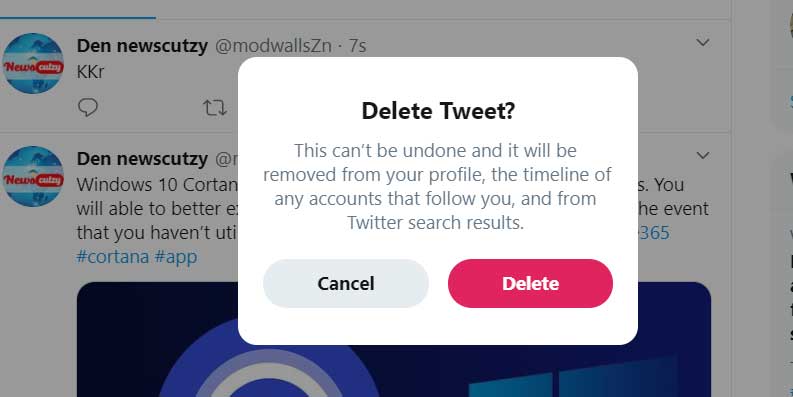
How to Scrub Your Twitter/X Profile
**Step One: Archive Your Tweets**
Before you proceed with deleting your Twitter history, it's recommended to archive your tweets. This archive will help you keep a record of your tweets before you remove them. To access your archive:
1. Go to your Twitter account.
2. Click on "More" in the left-hand column.
3. Navigate to "Settings and Support," then "Settings and Privacy."
4. Under "Your Account," click on "Download an archive of your data."
5. Twitter will send you an email with a ZIP file containing your archive.
**Step Two: Delete Single Tweets**
If you want to remove a few individual tweets, you can delete them one at a time:
1. Go to your Profile page.
2. Locate the tweet you want to delete.
3. Click on the three dots to the right of the tweet.
4. Choose "Delete."
5. Confirm the deletion.
**Step Three: Choose a Service to Manage Your Tweets**
There are various services available to help manage and delete your Twitter history. Some popular options mentioned in the article are TweetDelete, TweetEraser, TweetDeleter, and Redact. These services often use your Twitter archive to identify and delete tweets that are older than the 3,200 tweet limit set by Twitter's API. They might offer free or subscription-based plans with varying levels of deletion capabilities.
It's worth noting that while these services can assist in deleting past tweets, it's still a good idea to periodically check your profile, as there have been instances of deleted posts reappearing.
Full Article: https://www.theverge.com/23833347/twitter-x-history-delete-how-to
Headline: Wi-Fi sniffers strapped to drones—Mike Lindell’s odd plan to stop election fraud
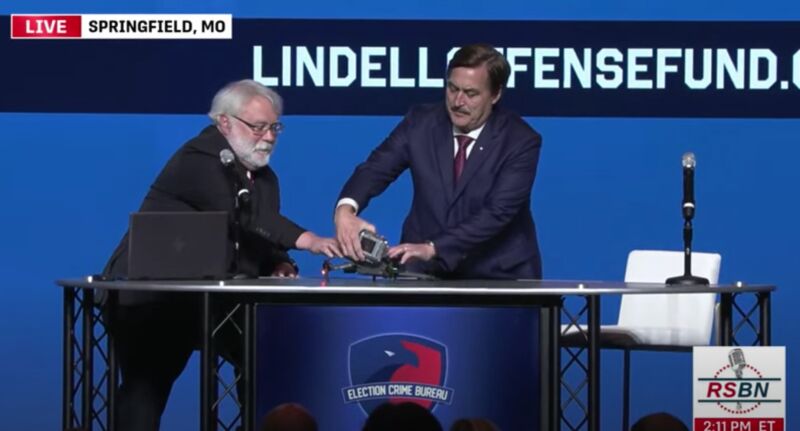
Key Summary: Mike Lindell, known for his controversial claims about election fraud, has introduced a system called the Wireless Monitoring Device (WMD) that he claims can detect and report Wi-Fi connections in election offices in real time. Lindell believes that a router connecting to the internet could be evidence of election fraud. The system is described as a low-weight, low-power device that uses passive signal detection to identify online systems, including internet routers and devices they connect to. Lindell's plan is to strap the sniffing device to drones that can hover about election offices during the election. Lindell emphasizes that his command center will receive alerts when an online connection is detected, but he doesn't disclose the location of the command center. The system's purpose is to gather information about online devices in election offices, although it can potentially detect unrelated devices, such as cell phones. The system's video presentation states that it provides information like MAC addresses, hardware vendors, and when devices were detected.
Link: https://arstechnica.com/tech-policy/2023/08/wi-fi-sniffers-strapped-to-drones-mike-lindells-odd-plan-to-stop-election-fraud/
How to Make Your Web Searches Secure and Private https://www.wired.com/story/how-to-make-web-searches-secure-private/


